
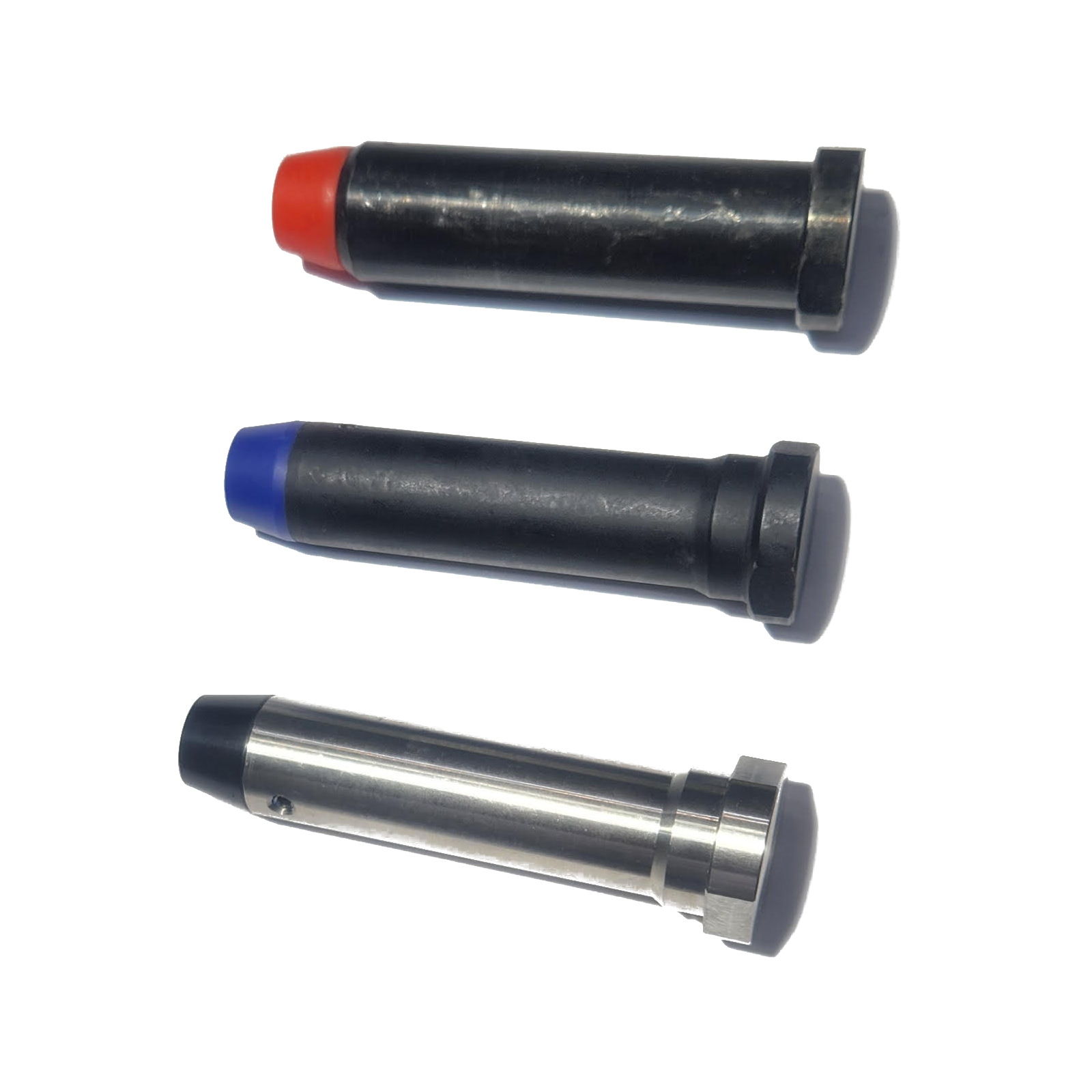
Description
The chief issue with ARs fired fast (via selectors, other companies products, autosears, etc) is Bolt Bounce. Not hammer follow (which looks the same), but bolt bounce. These systems allow you to pull the trigger (which drops the hammer) the instant the bolt is all the way seated in battery.
But sometimes, depending on a dozen variables from barrel length, gas system length, buffer weight, buffer type, ammo, lubrication, temperature, gas ring wear, gas port size, stock/brace configuration, recoil spring, the total weight of the gun, altitude, and even how firmly the gun is being held - the bolt carrier group can bounce back off the barrel slightly after it initially goes into battery. If your bolt carrier bounces while the hammer is falling, the hammer will hit the firing pin but the firing pin will not hit the primer due to being slightly out of battery, resulting in a light primer strike.
Bolt bounce isn’t a problem on semiautomatic ARs, because the miniscule time that it takes for the bolt to bounce and return to battery are significantly slower than the time it takes for a person to squeeze the trigger a second time. Consequently, most semiautomatic ARs sold on the market are wildly overgassed to favor reliability at the cost of running smoothly.
This is why we change buffers. Heavier buffers do two things:
- Slow down the bolt velocity. More mass = slower. Weight is the only thing that matters here, steel is the same as tungsten, shaker is the same as solid.
- "Dead blow hammer effect." Like a sand filled hammer that doesn't bounce. The weights inside bounce, not the bolt itself. Dampening effect. This is where shaker is better than solid, tungsten is better than steel.
So what buffer does your gun need? I have no idea. Every gun is different. I had a customer once who had a perfectly running gun, who put a scope on his gun, and then it started having bolt bounce and light primer strikes. More mass of the gun meant inelastic collision turned into an elastic one. The buffer you need is the buffer your specific gun needs, with that ammo, with that amount of lube, at that temperature, etc.
Generally, a tungsten shaker H2 does the job. Sometimes you need hydraulic. Sometimes your gun runs as configured. But it's a gun to gun to gun thing. Anyone who tries to sell you a one and done option is either lying, doesn't know what they're talking about, or selling you a hydraulic buffer that will probably actually work.
Reviews
There are no reviews yet.